

When you watch a high-fashion runway show from Paris, Milan, London, or New York, it is easy to wonder what a sculptural feathered gown or a floor-dragging exaggerated coat has to do with getting dressed for a Tuesday morning meeting. Yet within six to twelve months, almost every detail on that catwalk—from the specific shade of sage green to the width of a trouser leg—quietly reshapes the clothes available at every price point.
Understanding how runway trends filter into everyday fashion gives you a superpower as a shopper: you learn to spot macro shifts early, invest in silhouettes at the beginning of their lifecycle, and avoid buying into trends that are already on their way out.
The Runway as a Laboratory of Proportion and Colour
Creative directors rarely expect customers to walk down the supermarket aisle in unmodified showpieces. Instead, a twelve-minute runway presentation functions as a concentrated visual manifesto. Designers exaggerate proportions on the catwalk so the message reads clearly from across a room and through camera lenses.
How Exaggeration Gets Distilled for Real Life
- On the Runway: A jacket features dramatic, twenty-inch pagodalike shoulders and a cinched corset waist.
- In the Showroom (Commercial Edit): Buyers order the same jacket with a subtle, flattering half-inch shoulder pad and a single-button waist closure that skims the torso.
- In Your Everyday Closet: You experience the trend as a crisp workwear blazer that gives your posture extra presence without restricting movement.
The Three Stages of the Trend Lifecycle
Every major fashion movement travels through three distinct phases before becoming a mainstream staple:
Stage 1: Textile Mills and Colour Forecasting (18–24 Months Ahead)
Long before a model steps onto a runway, global textile fairs like Première Vision in Paris and Pitti Filati in Florence establish the yarns, weaves, and dye pigments that mills will produce. When you suddenly see burgundy leather, sheer organza, or brushed mohair across ten different designer collections in the same week, it is because those houses sourced from the same forward-looking textile developments.
Stage 2: Catwalk Debut & Editorial Curation (6–12 Months Ahead)
During the Big Four fashion weeks, editors, stylists, and retail buyers identify the recurring threads across collections. At this stage, celebrity fashion stylists pull runway looks for red carpets and press tours, introducing new silhouettes—such as barrel-leg trousers or puddle hems—to the public eye.
Stage 3: High-Street Adaptation & Everyday Styling (Now)
Contemporary brands and accessible retailers translate those catwalk codes into washable fabrics, practical heel heights, and inclusive sizing. A runway metallic evening gown becomes a wearable silver leather ballet flat or a subtle metallic knit top paired with classic blue jeans.
“Don’t look at a runway show for literal outfit instructions. Look at the colour combinations, the shoe-to-hem relationship, and how fabrics are layered together.”
Four Catwalk Codes You Can Apply Today without Buying Anything New
You don’t need a couture budget to borrow the best ideas from this season’s runway shows. In fact, many of the sharpest catwalk takeaways are purely styling gestures:
- Unexpected Colour Pairing: Runway stylists love pairing colours that feel slightly off-kilter—such as icy baby blue with rich chocolate brown, or pale pink with olive green. Try combining two existing pieces in your closet using these runway palettes.
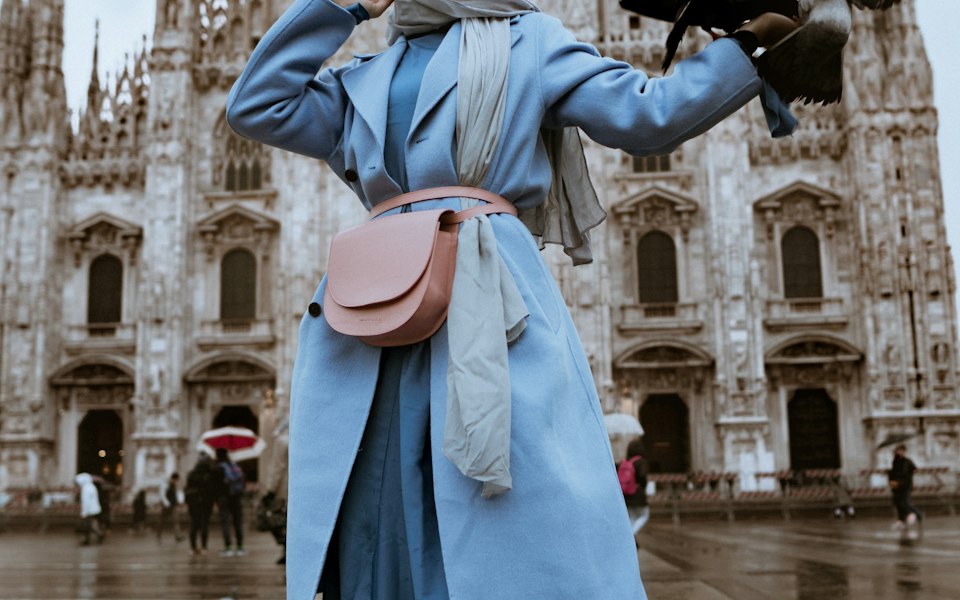
- The Half-Tuck and Belted Outerwear: Belting a cardigan or an unbuttoned blazer on the outside instantly recreates the runway’s focus on waist definition.
- Collar and Cuff Layering: Let the collar and cuffs of a striped cotton shirt extend noticeably beyond the neckline and sleeves of a crewneck sweater.
- Monochrome Texture Mixing: Dress head-to-toe in a single colour family (like charcoal grey, navy, or cream) while mixing three distinct fabric textures—such as denim, silk, and chunky rib-knit wool.
For more ways to apply editorial tricks to your existing clothes, read our guide on simple styling tips that instantly make basic outfits look better.